
International Congress “Transport Problems” – a meeting of transport professionals from all continents of the world in Katowice – 2026!
"Transport Problems" is not only the title of a scientific journal published by the Silesian University of Technology (SUT), but also the International Congress "Transport Problems," this year encompassing the 18th International Scientific Conference "Transport Problems" and the 15th International Symposium of Young Researchers "Transport Problems." This is a series of meetings for scientists organized by the Faculty of Transport and Aviation Engineering of the SUT at the Faculty's headquarters and in attractive locations in southern and central Poland. As in previous years, the symposium and conference were held in a mixed format, i.e., on-site and via Zoom and YouTube platforms.
The 15th Symposium of Young Scientists Conducting Research Related to Broadly Understood Transport Issues took place on June 22–23, 2026, and the 18th International Scientific Conference "Transport Problems" on June 24–26, 2026. These two events brought together 223 specialists from 24 countries. During this year's congress, all continents of our planet, except Antarctica, were represented by scientists. Therefore, the International Congress "Transport Problems" can undoubtedly be considered an important venue for intercontinental scientific discussion on transport – a field so crucial to the economy. Before Russia's attack on Ukraine, many conference participants also came from Russia and Belarus. After this event, the organizers excluded scientists from these countries from the scientific committee and did not allow specialists representing these countries to participate in the proceedings. Another noteworthy element is the publication of a post-conference monograph (congress proceedings) with nearly 900 pages, in which 75 articles were published.
In addition to the purely scientific events, participants of the 15th Young Scientists Symposium had the opportunity to explore the modern laboratories operating in Katowice, at the Silesian University of Technology, including the Silesian University of Technology's Air Traffic Laboratory, which facilitates the training of air traffic services personnel and serves as a full-scale replica of air traffic controller stations for professional training of these personnel. Symposium participants also had the opportunity to learn about the history of the region and Poland during a visit to the Central Firefighting Museum in Mysłowice and a tour of the Tychy Princely Brewery.
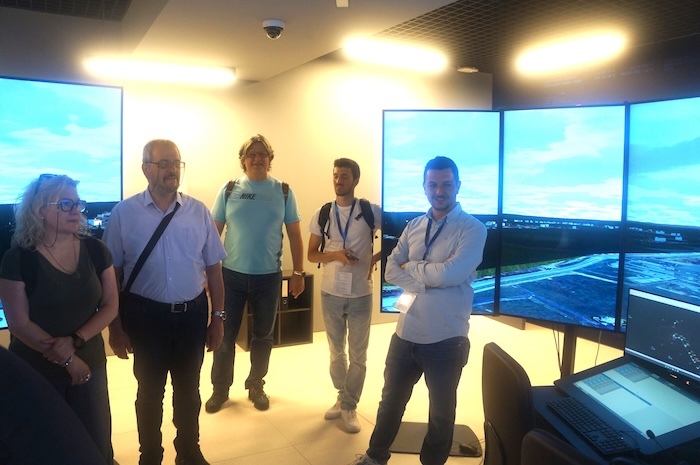
Symposium participants during a visit to the Air Traffic Laboratory of the Silesian University of Technology
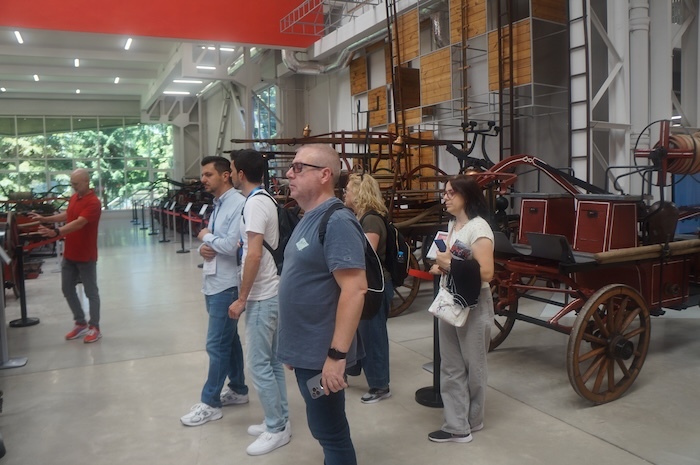
Symposium participants visit the Central Firefighting Museum in Mysłowice
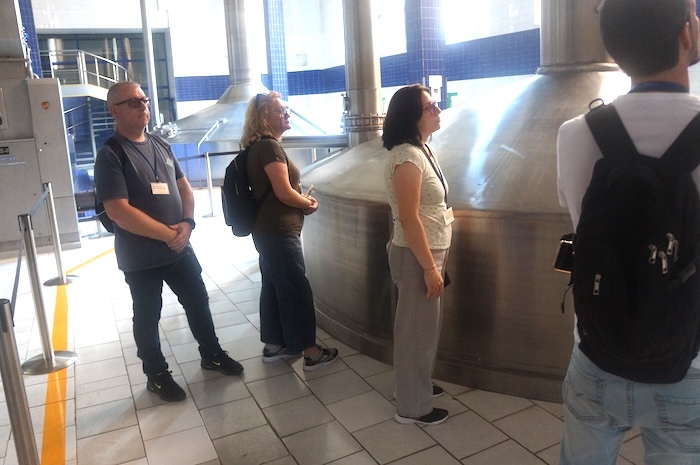
Symposium participants visit Tyskie Browary Książęce in Tychy
The Faculty of Transport and Aviation Engineering at the University of Technology has long enjoyed a special friendship with colleagues from the nearby Karol Szymanowski Academy of Music in Katowice. The Organ Museum, located under the academy's roof, was a particularly interesting venue for symposium participants.
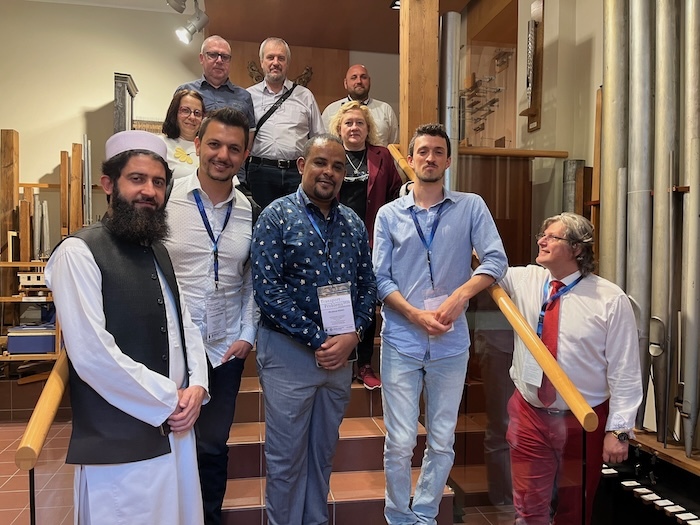
Symposium participants visit the Organ Museum at the Karol Szymanowski Academy of Music in Katowice
A unique feature of the Symposium described above was the opportunity for discussions between scientists separated by intercontinental distances and multiple time zones. Thanks to the solutions implemented by the organizers, the discussions took place between participants gathered in the auditorium located at the Faculty of the Silesian University of Technology, scientists from the Institute of Automation, Shandong Academy of Sciences (China), and the School of Applied Computational Sciences in Nashville (USA) – a difference of 13 time zones.
The plenary session of the eighteenth Transport Problems Conference took place at the Faculty of Transport and Aeronautical Engineering of the Silesian University of Technology. It was opened by the coordinator of these events, prof. Aleksander Sładkowski. On behalf of the Rector of the Silesian University of Technology, prof. Marek Pawełczyk, the conference patron, the welcome address was delivered by the Vice-Rector for Science and International Cooperation, prof. Sebastian Werle. The conference was also patronized by the Mayor of Katowice, dr. Marcin Krupa, who personally welcomed the participants, while Bogusław Lowak, Head of the Katowice Department of Transport, presented achievements related to the introduction of the Clean Transport Zone (CTS) in Katowice. The third patron was the National Representation of PhD Students, particularly the patron of the "Transport Problems" Symposium for Young Scientists. Leading scientists from Ukraine, Georgia, and Poland representing all transport sectors, as well as representatives of the Road Traffic Police Department and the Provincial Road Transport Inspectorate, presented at the plenary session. This selection of speakers during the plenary session was no accident. In particular, in his 30-minute lecture entitled "Current issues of visual intelligent navigation of autonomous aviation platforms and ways to solve them," prof. Kostiantyn Dergachov of KhAI University (Kharkiv) described new scientific achievements in the development of drones used in combat zones. In his lecture, he emphasized that these achievements are being developed and taught to students at a university located within gunfire range of the enemy, and that over 170 gun shells and guided bombs have hit the university campus.
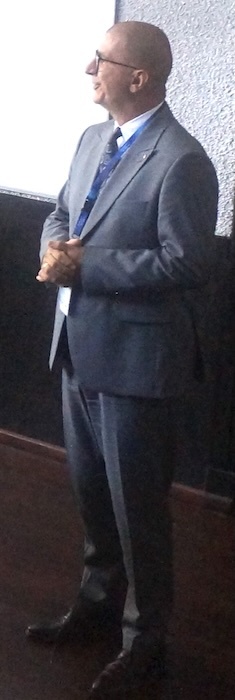
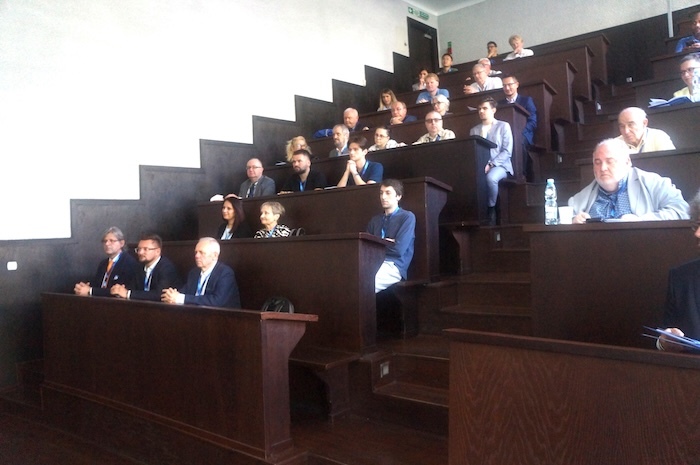
Vice-Rector for Science and International Cooperation, prof. Sebastian Werle, addresses the conference participants on behalf of the patron of the congress; Plenary session of the conference
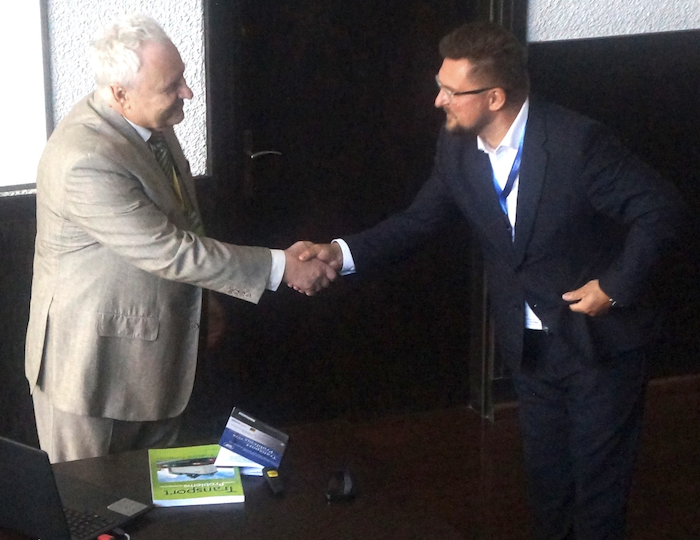
The Mayor of Katowice, dr. Marcin Krupa, welcomes the conference participants in the person of its coordinator, prof. Aleksander Sładkowski
The conference participants then traveled to Łódź, where discussions were held in six sections. The presentations by delegations from Lithuania, Israel, Australia, Bulgaria, and other countries generated particular interest. In addition to the fruitful discussions, guests had the opportunity to learn about the history of textile technology at the Manufaktura Factory Museum.
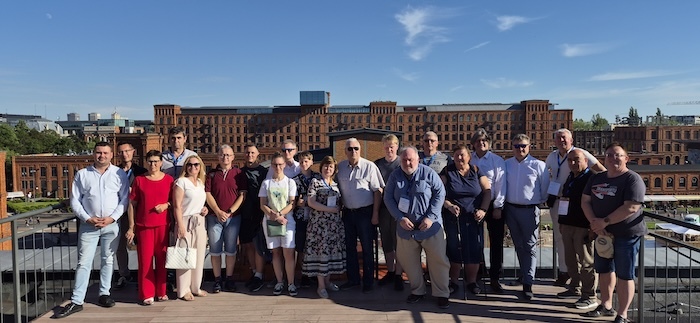
Conference participants visiting the Factory Museum - Manufaktura in the city of Łódź
The first day concluded with discussions in two parallel sections. Of particular note were the presentations by scientists from Ukraine, who could participate online free of charge, thanks to the support provided by the organizers. Unfortunately, in some cases, power outages occurred in Ukrainian cities during the bombings. Nevertheless, the indicated presentations were still held because their presentations were sent to the organizing committee in advance.
On the second day of the conference, participants followed in the footsteps of the most eminent Polish astronomer, Nicolaus Copernicus, who was born in Toruń. In that city, the scientists visited a museum located in a house belonging to Copernicus's family.
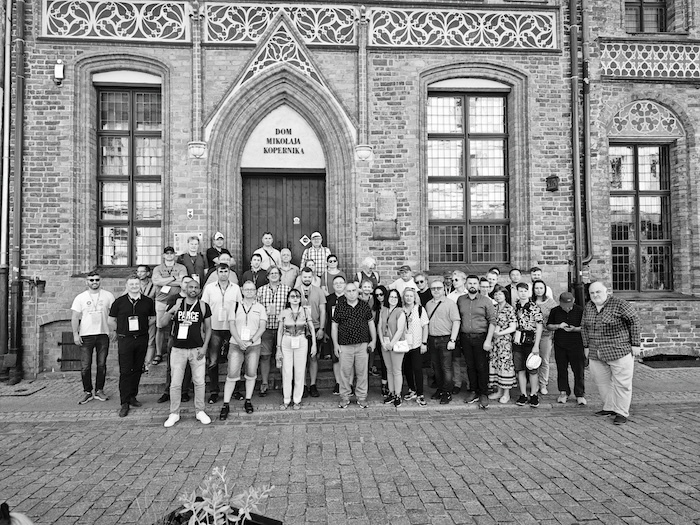
Conference participants before visiting the house belonging to the family of Nicolaus Copernicus
During their stay in Toruń, the scientists then visited the Cathedral Basilica of St. John the Baptist and St. John the Evangelist, where Nicolaus Copernicus was baptized, and had the opportunity to view an early Gothic baptismal font dating from the 13th century. Participants also visited Toruń's beautiful ancient market square, saw the Leaning Tower of Toruń, and other interesting sites in this city, which holds significant significance for global history and culture.
After visiting Toruń, the scientists viewed the fortifications of the Toruń Fortress - Fort IV, which was built in 1878-1884 as the third fort of the Toruń fortress ring.
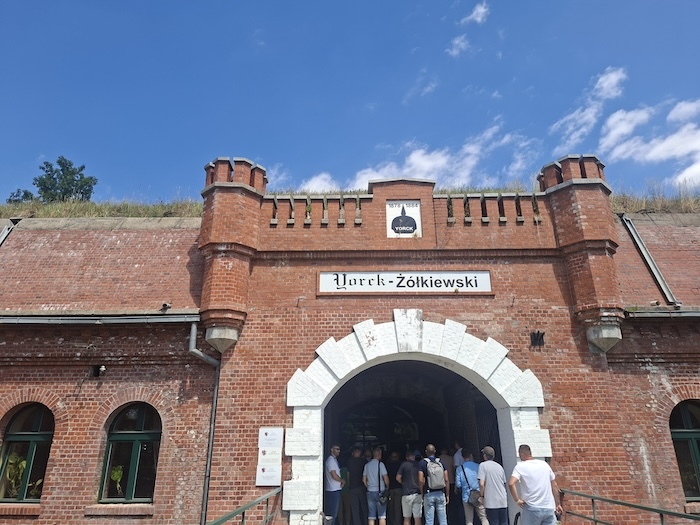
Toruń Fortress - Fort IV
The cultural and historical program of the symposium and conference was extensive. On the last day of the conference, after the conference sessions, participants could visit the Łódź City Museum – Poznański Family Palace and explore the magnificent interiors, which contain many original features. On the way back to Katowice, the scientists could see the operation of the Bełchatów Brown Coal Mine.
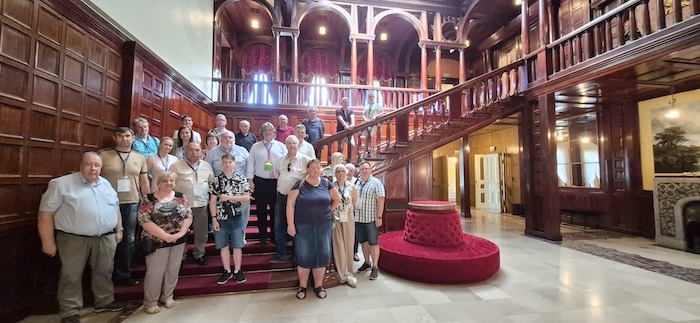
Visiting the Poznański Family Palace
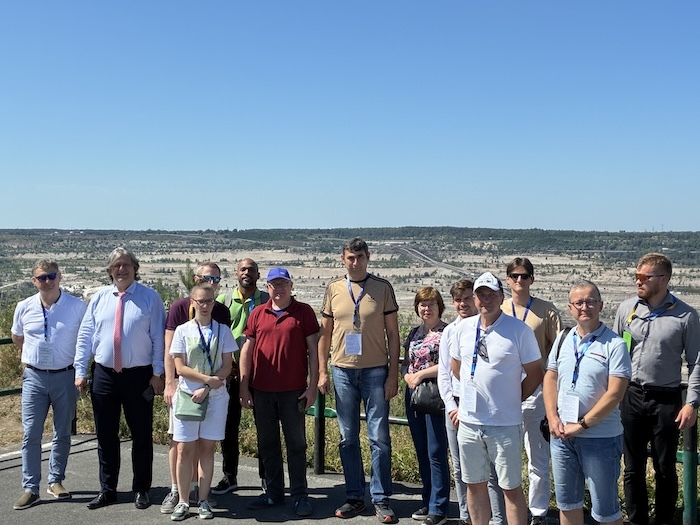
Conference participants viewing the Bełchatów Brown Coal Mine from the viewing point
The organizers and participants declared the International Congress "Transport Problems" an unquestionable success. The organizers invite all scientists and practitioners interested in exchanging experiences in this discipline to the next edition, which will take place from June 21st to 25th, 2027, under the common name "Transport Problems 2027," which will consist of the 16th Symposium of Young Scientists and the 19th International Scientific Conference.
 mob: +48 605 553 314
 tel: +48 32 603 4291
 fax: +48 32 603 4157
 skype: sladk_mobile
 email: